Source Eco Friendly Ceramic Coffee Mug with Spoon for Daily Use, Gifts, and Promotions
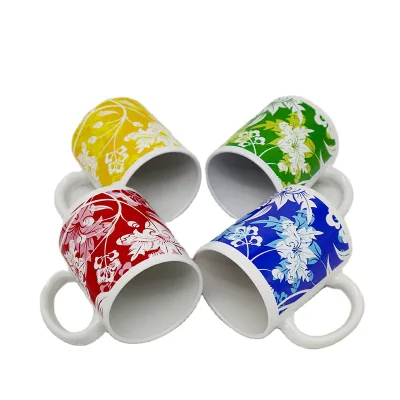
Compare 30 eco friendly ceramic coffee mug with spoon options featuring single-layer designs, handles, and customizable logos. Buyers can review specifications, materials, and pricing for daily use, gifts, and promotional events.
Key considerations
Products List




Comprehensive Sourcing Guide
Sourcing Strategy for Eco-Friendly Ceramic Coffee Mugs with Spoon
Procuring eco-friendly ceramic coffee mugs equipped with spoons requires a disciplined approach that balances material integrity, functional design, and supply chain reliability. The global market for sustainable tableware has expanded significantly, driven by corporate sustainability mandates and consumer preference for reusable alternatives to single-use plastics. For buyers targeting the specific intersection of ceramic construction, environmental friendliness, and integrated cutlery, the sourcing process demands a granular understanding of product attributes, manufacturing standards, and customization capabilities. This guide outlines the critical factors for evaluating suppliers and products that align with the core keyword requirements, ensuring that procurement decisions are grounded in verified facts rather than marketing assertions.
Material Composition and Functional Attributes
The foundation of a high-quality ceramic mug lies in its material composition and the specific functional properties it offers. In the context of the available product data, the primary material is identified as porcelain or general ceramic, with some listings specifically noting "Potttery" as a material category. Porcelain is generally preferred for its density, translucency, and resistance to thermal shock, making it suitable for heat preservation and the ability to withstand high temperatures. These functional attributes are critical for coffee mugs, which must maintain beverage temperature without compromising the structural integrity of the vessel.
Buyers must verify that the ceramic body is glazed, a technical process that seals the porous clay, rendering the surface non-porous and easy to clean. The glaze is not merely aesthetic; it is a functional requirement for food safety and hygiene. The product listings indicate that the cups are designed for daily use, health care, and promotion, suggesting a need for durability. Furthermore, the "Eco-Friendly" feature is a recurring attribute across multiple listings. In a B2B context, this designation should be scrutinized to ensure it refers to the longevity of the product (reusability) and the manufacturing process, rather than unverified claims about biodegradability, as fired ceramic is not biodegradable in the traditional sense.
The inclusion of a spoon is a specific requirement that adds complexity to the sourcing process. The provided data confirms the availability of spoons with specific dimensions, such as a length of 12cm and a width of 2.8cm for certain models. This accessory must be made of a material compatible with the mug, typically stainless steel or food-grade plastic, though the primary focus here is the ceramic vessel. The presence of a handle is standard, with some variations offering lids, which suggests that the "spoon" requirement might be part of a larger set or a specific promotional bundle. Buyers should confirm that the spoon is included in the packaging and is of a size that fits comfortably within the mug's opening without interfering with the handle.
Technical Specifications and Dimensional Standards
Precision in technical specifications is vital for inventory planning, packaging logistics, and ensuring the product meets the intended use case. The ceramic mugs in the observed market display a wide range of dimensions, indicating that there is no single "standard" size, but rather a variety of models catering to different volume needs. For instance, specific product models such as VG-M1486 and VG-M1487 exhibit distinct dimensional profiles. The VG-M1486 model is noted with a top diameter of 8.1cm, a bottom diameter of 5.9cm, and a height of 7.9cm. In contrast, the VG-M1487 model features a top diameter of 10.5cm, a bottom diameter of 5.6cm, and a height of 14.3cm.
These dimensional variances directly impact the capacity and the user experience. A taller mug with a wider top, like the VG-M1487, is likely designed for larger beverage volumes, potentially suitable for lattes or tea, whereas the shorter, wider mug (VG-M1486) may be better suited for espresso or small coffee servings. Other listings mention specific capacities, such as 350ml and 410ml, with corresponding dimensions like a diameter of 8.2cm and height of 10.2cm for the 350ml variant. When sourcing, buyers must align these specifications with their target market's preferences. A "one-size-fits-all" approach is rarely effective in the ceramic tableware sector.
The structural design is another critical technical factor. The products are described as "Single-layer Ceramic Cup," which implies a specific thermal mass and weight profile. Single-layer mugs heat up faster than double-walled insulated mugs but may not retain heat as long. This distinction is crucial for applications involving hot beverages. The "Simple" and "Creative" styles noted in the data suggest that the aesthetic design varies, but the underlying structural integrity remains consistent. Buyers should request detailed technical drawings or CAD files to verify the wall thickness and the stability of the base, especially for taller models that might be prone to tipping if the center of gravity is not properly managed.
Customization Capabilities and Design Flexibility
One of the most significant advantages of sourcing ceramic mugs from the observed market is the high degree of customization available. The product attributes explicitly state that customization is available, with options for OEM (Original Equipment Manufacturer) and ODM (Original Design Manufacturer) services. This flexibility allows businesses to brand their products effectively for promotional campaigns, corporate gifts, or retail lines. The "Design" attribute confirms that customized designs are acceptable, and the "Logo" attribute indicates that customized logos can be printed on the product.
The customization process typically involves selecting the base model, such as the VG-M1486 or VG-M1487, and then applying branding elements. The "Fancy" attribute, described as "Printed," suggests that the decoration method is likely screen printing or decal application. Buyers must ensure that the printing method used is durable and food-safe, especially for mugs that will be washed frequently. The "Eco-Friendly" claim is further reinforced if the inks used are non-toxic and lead-free, a standard requirement for food-contact ceramics.
The "Customized" attribute also extends to the product specifications. Suppliers indicate that quality standards can be "According to Your Requirements," which implies a willingness to accommodate specific dimensional or material requests. However, this flexibility often comes with a Minimum Order Quantity (MOQ). The observed MOQ range in the market is between 50 and 5000 units. For small businesses or pilot programs, the lower end of this range is accessible, but larger orders may be required to achieve cost efficiencies. The "Age" attribute, listed as "All The People" or "Adult," suggests that the designs are generally unisex and suitable for a broad demographic, which simplifies the customization process for mass-market products.
Compliance, Quality Standards, and Safety Verification
In the B2B procurement of food-contact ceramics, compliance with safety standards is non-negotiable. The product data mentions a "Quality Standard" of "a-B Grade," which likely refers to a classification system where "A" represents first-quality goods and "B" represents second-quality goods with minor cosmetic imperfections. Buyers must clarify the specific meaning of these grades in the context of the supplier's internal quality control protocols. A-B Grade certification should not be assumed to be a universal international standard but rather a supplier-specific or regional classification.
For international trade, buyers should verify that the ceramic mugs comply with relevant food safety regulations, such as FDA standards in the United States or EU Framework Regulation (EC) No 1935/2004 in Europe. These regulations govern the migration of heavy metals like lead and cadmium from the glaze into food and beverages. While the provided data does not list specific test results or certification numbers, the "Eco-Friendly" and "Health Care" usage attributes imply a focus on safety. Buyers must request third-party test reports to verify that the glaze and the ceramic body meet these international safety thresholds.
The "Standard" attribute also includes specific dimensional tolerances, such as the "Top Dia. 8.1xbottom5.9xH7.9cm" specifications. Deviations from these dimensions can affect the stacking efficiency during shipping and the fit of lids or sleeves. Quality control should include checks for structural integrity, such as the absence of cracks, chips, or warping. The "Single-layer" construction must be free of internal stress that could lead to breakage during thermal cycling. Buyers should implement a rigorous inspection protocol that includes visual checks for glaze defects and functional tests for thermal shock resistance.
Cost Drivers and Procurement Economics
Understanding the cost drivers for ceramic mugs is essential for budgeting and negotiating effectively. The observed price range in the market is between 0.01 and 8 USD, a wide spectrum that reflects differences in material quality, production complexity, customization level, and order volume. The lower end of this range likely corresponds to basic, unbranded, single-layer mugs with minimal decoration, while the higher end may include premium porcelain, complex custom designs, or bundled sets with lids and spoons.
The MOQ is a primary cost driver. The range of 50 to 5000 units indicates that suppliers are willing to accommodate small batches, but the unit cost will be higher for smaller orders due to the fixed costs of mold setup, glazing, and firing. As the order volume increases, the per-unit cost typically decreases. Buyers should analyze the total cost of ownership, including shipping, which can be significant for heavy ceramic products. The dimensions and weight of the mugs directly impact freight costs, so optimizing the packaging to maximize container utilization is a key strategy for cost reduction.
Additionally, the "Customization" factor introduces variable costs. OEM and ODM services require design time, mold creation, and setup for printing or decoration. These costs are often amortized over the order quantity. For buyers planning long-term procurement, investing in a custom mold may be justified if the order volume is sufficient to spread the initial investment. The "Stocked" attribute in some listings suggests that certain models are available as ready-to-ship inventory, which can reduce lead times and eliminate setup costs, making them a cost-effective option for immediate needs.
Supplier Evaluation and Long-Term Procurement Considerations
Selecting the right supplier is as important as selecting the right product. The product data indicates that the origin is primarily China, with specific mentions of Shandong as a production hub. Shandong is known for its ceramic industry, but buyers should not rely solely on the region name. Instead, they must evaluate the supplier's capacity, quality control systems, and track record. The "Customized" and "OEM" capabilities suggest that the supplier has the technical infrastructure to handle bespoke orders, but this must be verified through audits or sample reviews.
Long-term procurement considerations include the reliability of the supply chain and the ability to scale. The "Lead time" is not explicitly provided in the data, but buyers should anticipate that custom orders will require more time than stocked items. Establishing a clear communication channel regarding production schedules and quality checks is essential. The "Quality Standard" of "a-B Grade" should be clearly defined in the contract to avoid disputes over product acceptance. Buyers should also consider the environmental impact of the supply chain, ensuring that the supplier adheres to sustainable manufacturing practices that align with the "Eco-Friendly" branding of the product.
Finally, the "Usage" attributes, including "Promotion," "Gift," "Wedding," and "Birthday," highlight the versatility of the product. This versatility makes ceramic mugs a valuable asset for various marketing and gifting strategies. However, buyers must ensure that the product design and quality are consistent across all batches to maintain brand reputation. Regular quality audits and sample retention programs are recommended to ensure that the long-term supply meets the initial specifications and expectations. By focusing on these strategic elements, buyers can secure a reliable supply of high-quality, eco-friendly ceramic coffee mugs with spoons that meet their specific business needs.
FAQs
What materials are used for these eco-friendly ceramic mugs?
The mugs are primarily made of porcelain or general ceramic materials, including pottery. These materials are selected for their ability to withstand high temperatures and ensure health care safety during daily use.
Can I customize the logo and design on the ceramic mugs?
Yes, customization is available for logos and designs, including OEM and ODM services. Buyers can request specific printed designs or customized logos to suit promotional or gift purposes.
What are the standard dimensions for the ceramic coffee mugs?
Dimensions vary by model, such as a top diameter of 8.1cm with a height of 7.9cm for one type. Another model features a top diameter of 10.5cm and a height of 14.3cm to accommodate different volume needs.
How much is the minimum order quantity for these mugs?
The minimum order quantity ranges from 50 to 5000 units depending on the supplier and customization level. Lower MOQs are available for stock items, while custom orders may require higher volumes.
Are these ceramic mugs suitable for hot beverages?
Yes, the single-layer ceramic cups are designed to withstand high temperatures and provide heat preservation. They are suitable for daily use, health care, and serving hot drinks like coffee or tea.
What accessories are included with the ceramic mugs?
The mugs typically come with a handle and a spoon, with some models also including a lid. The spoon size is often around 12cm in length, making it compatible with the mug opening.